
Sex Offender Checks in Lynn County
The Texas Public Sex Offender Registry is the main public search channel for Lynn County. Texas DPS compiles data that local registration authorities collect and verify under Code of Criminal Procedure Chapter 62. Searchers can begin with a name, an address, a city, a ZIP code, or the county filter. A location search is often more useful for neighborhood awareness, while a name search helps when spelling and aliases are already known.
The official registry search interface shows the controls available to the public.
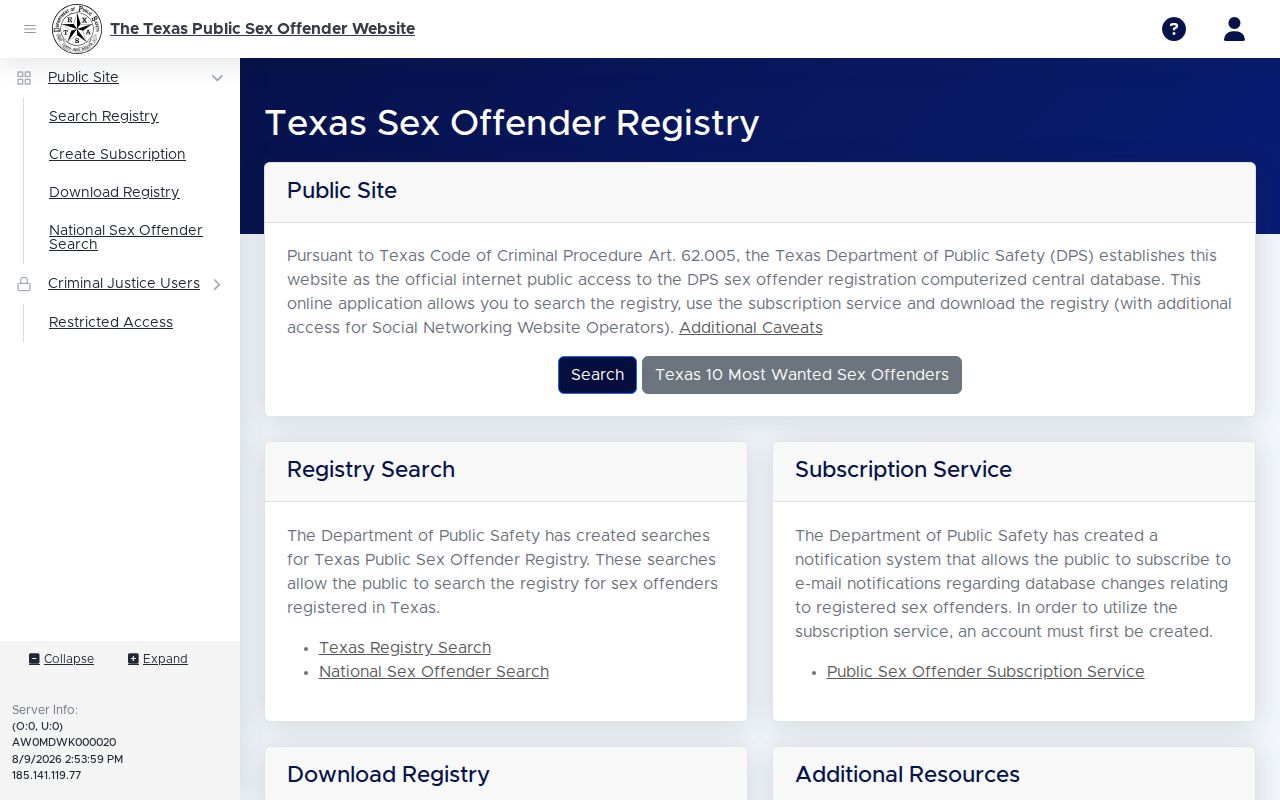
The screen is the starting point, not a substitute for reading the full profile, status, offense information, and verification details.
Local responsibility depends on residence. Tahoka Police is the registration authority inside Tahoka. Outside a municipality, the Lynn County Sheriff handles the local role. Texas law assigns registration to the police chief where a person resides, or to the sheriff where the residence is outside a municipality. That split matters when a reader needs to report a suspected address or status problem.
Note: A registry result supports safety awareness, but it does not prove that every map point is a surveyed residence location.
Tahoka Police or Lynn County Sheriff Registry
The boundary between city and county service decides which local office receives a Lynn County registry concern. Contact Tahoka Police through City Hall at 1807 North Main Street, Tahoka, or call 806-561-4211 when the address is inside Tahoka. For a residence outside a municipality, contact the Lynn County Sheriff at 810 Lockwood Street, Tahoka, 806-561-4505. An emergency should go to 911.
Initial registration generally occurs no later than the later of seven days after arrival or the first date allowed by the local authority's policy. Local officials verify information, make required school notices, and transmit registry data to DPS. The DPS program page explains this state and local division of work.
The Texas Sex Offender Registration Program source outlines those official duties.
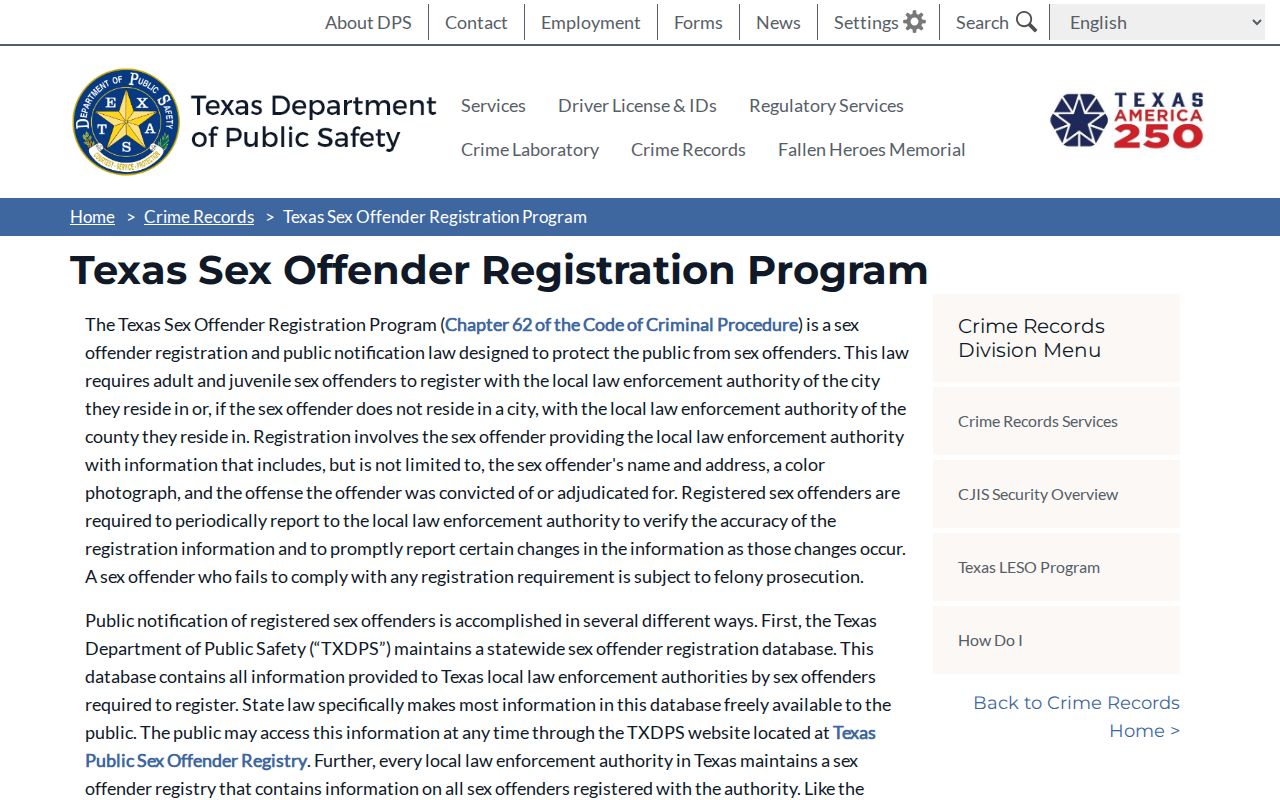
The program material helps explain why Lynn County verification begins locally even though the public database is statewide.
How to Search the Texas Public Sex Offender Registry
A focused Lynn County registry search works best when the reader chooses one route and adds only reliable facts. Broad location searches can reveal nearby entries, while exact name details can narrow a person search. The interface can change, so read the live labels and conditions before submitting.
- Open the Texas DPS public registry and review its conditions of use.
- Choose a name, address, map, city, ZIP, or county-based route and enter the facts you know.
- Select Lynn in the county control when the goal is a countywide result, then review the list or map.
- Open the relevant profile and compare aliases, physical description, offense, status, address, and verification information before drawing a conclusion.
| Field label | Type | Required | Options or notes |
|---|---|---|---|
| Last / First Name | Text | Route-dependent | Name route; aliases may appear in profiles |
| Address / Street | Text | Location route | Combine with city or ZIP for proximity work |
| City | Text or list | Route-dependent | Tahoka, O'Donnell, or Wilson as applicable |
| County | Dropdown | No | Select Lynn |
| ZIP Code | Text | No | Use a five-digit ZIP |
| Map / Area Search | Map or address | Route-dependent | Results rely on geocoded registered locations |
| Submit / Search | Button | Yes | Clear or Reset may also appear |
Keep spelling variation in mind. A person may appear under an alias, and a location result may change after a move is processed. The Lynn County registration authority is the right place to ask about a suspected reporting issue, while the public page remains the correct search product.
Lynn County Registry Map Limits
A Lynn County map pin is a visual search aid, not a promise of survey-grade precision. Texas registry results can reflect reporting or geocoding lag. Some profiles may describe a location in a way permitted by law rather than presenting a conventional street point. Readers should use the displayed address and status together, and should not infer that a pin identifies a specific unit, room, or property boundary.
For nearby communities, the city filter can separate Tahoka, O'Donnell, and Wilson results when applicable. A county filter gives a broader view, but city boundaries still determine the local registration office. If a displayed location seems inconsistent, do not confront anyone. Record the public profile details and contact Tahoka Police or the Lynn County Sheriff through the verified numbers above.
Inside a Registry Profile
A Texas registry profile returned for Lynn County combines identity, registration, physical-description, offense, and status fields that Chapter 62 permits DPS to disclose. It also leaves sensitive data out. The profile should be matched as a whole because a shared name alone is weak identification.
| Name and Aliases | Public name forms and known aliases used to distinguish records. |
|---|---|
| Photo and Description | Color photograph plus permitted sex, race, height, weight, eye color, hair color, birth-date or age information, and marks or tattoos. |
| Address or Location | Primary and secondary registered address or location information as legally public. |
| Offense Details | Reportable offense, statute or description, conviction or adjudication date, and public victim age or sex category. |
| Risk and Registration | Risk level, registration status, and verification information shown by the public profile. |
| Other Public Fields | Permitted institution or school information, sentence or discharge details, SID, and qualifying vehicle data. |
DPS excludes Social Security numbers, driver license information, phone numbers, online identifiers, employer contact details, victim-identifying information, and other confidential department data. Those omissions are deliberate. A blank public field should not be filled with guesses or data copied from another source.
NSOPW After a Lynn County Registry Search
The National Sex Offender Public Website adds a cross-state layer when a Lynn County search involves a past address, a move, or nearby jurisdiction. The U.S. Department of Justice service routes searches across participating public registries. It supplements the Texas system, but it does not replace a full Texas profile or the local registration authority.
The national search interface demonstrates the wider geographic scope.
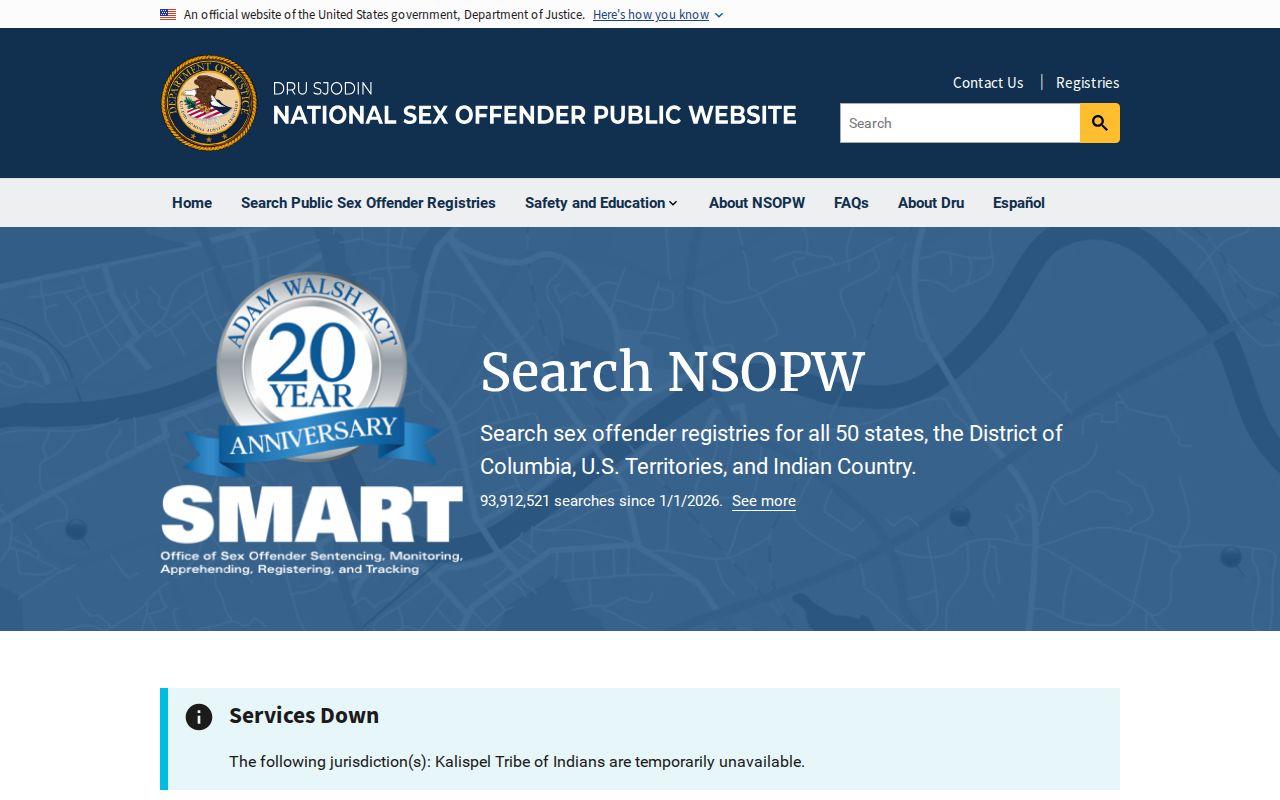
Use it when the Texas result may not cover another state, then return to the participating jurisdiction's official profile for current details.
Temporary service gaps can occur. If NSOPW is unavailable, search the Texas registry directly for a Texas address and use the other state's official registry for a location across state lines. Never treat a no-result screen as proof that no registration duty exists.
Texas Registration Levels and Requirements
For Lynn County records, Texas uses low, moderate, and high risk assessment for community-notification functions, but registration duration is driven by Chapter 62 offense and outcome rules. It is not a simple copy of the federal Tier I, II, and III system. That distinction prevents a common reading error when a public profile shows risk information.
| Texas category | General duration | Public or notice effect |
|---|---|---|
| Lifetime offenses or repeat reportable adjudications | Life | Public registry unless a specific legal exception or order applies |
| Other adult reportable conviction or adjudication | Generally 10 years after discharge or release from supervision, as the statute calculates | Public registry during the registration duty |
| Juvenile registration | Generally 10 years after disposition or release | A juvenile court may grant an exemption, deferral, or nonpublic order |
| High-risk or civilly committed notice | Duration still follows the statute | DPS postcard notice in English and Spanish may follow a triggering move or release |
Verification frequency varies with the offense, risk, and governing rule. A blanket annual or quarterly claim would be unreliable. Ask the registration authority about the legal category rather than inferring a schedule from a risk label.
The Texas Board of Pardons and Paroles page shows the separate state authority that makes parole decisions.
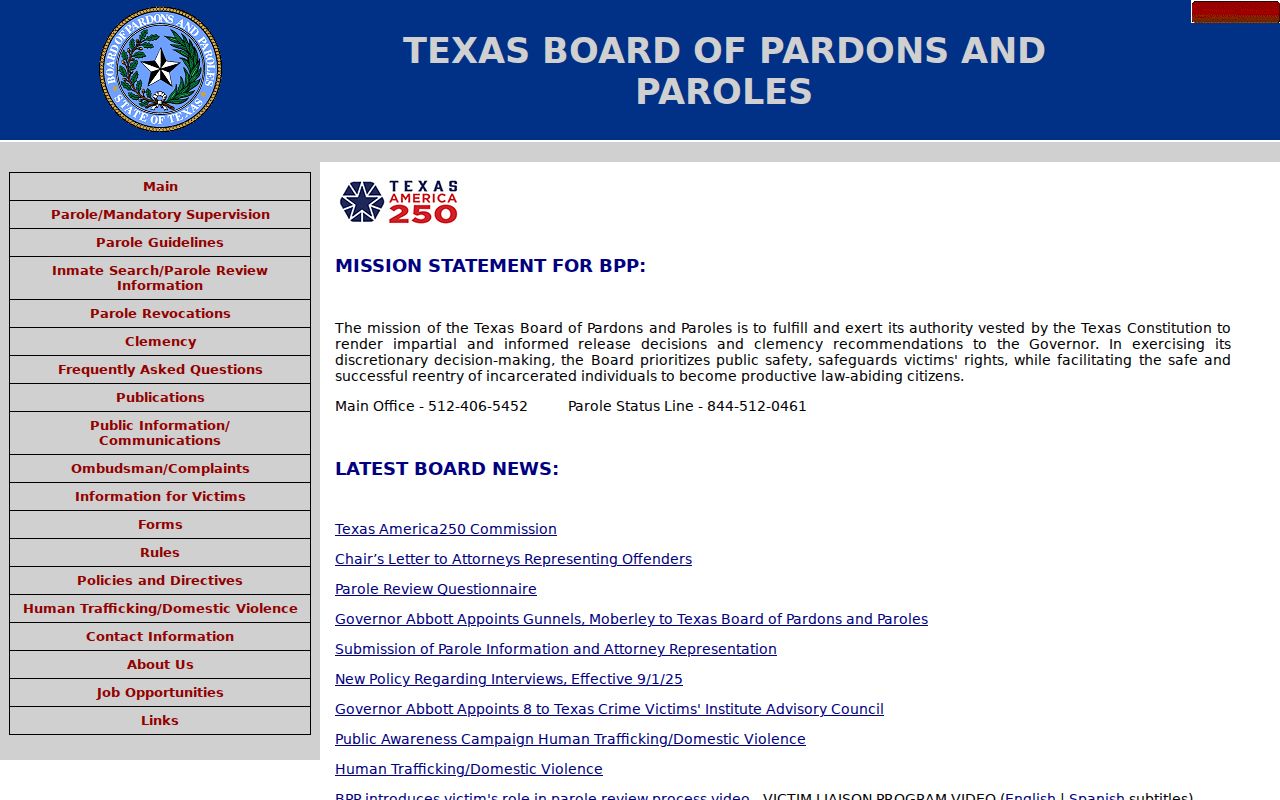
Parole status and Chapter 62 registration are different legal subjects, even when both apply to the same person.
Lynn County Registry Address Alerts
DPS materials describe email and community-notification functions in the public-facing system. Account, email, location, and verification steps should be read from the live signup screen because the interface can change. Address alerts can support Lynn County community awareness, but a subscriber should still open the current official profile before relying on a notice.
Lynn County residents may also receive Texas community postcards in English and Spanish for certain high-risk or civilly committed move or release events. That notice consequence does not set the person's registration duration, which remains controlled by Chapter 62. Schools receive notice when the statute requires it through the local authority's reporting work.
The TDCJ Parole Division source explains a different form of state supervision.
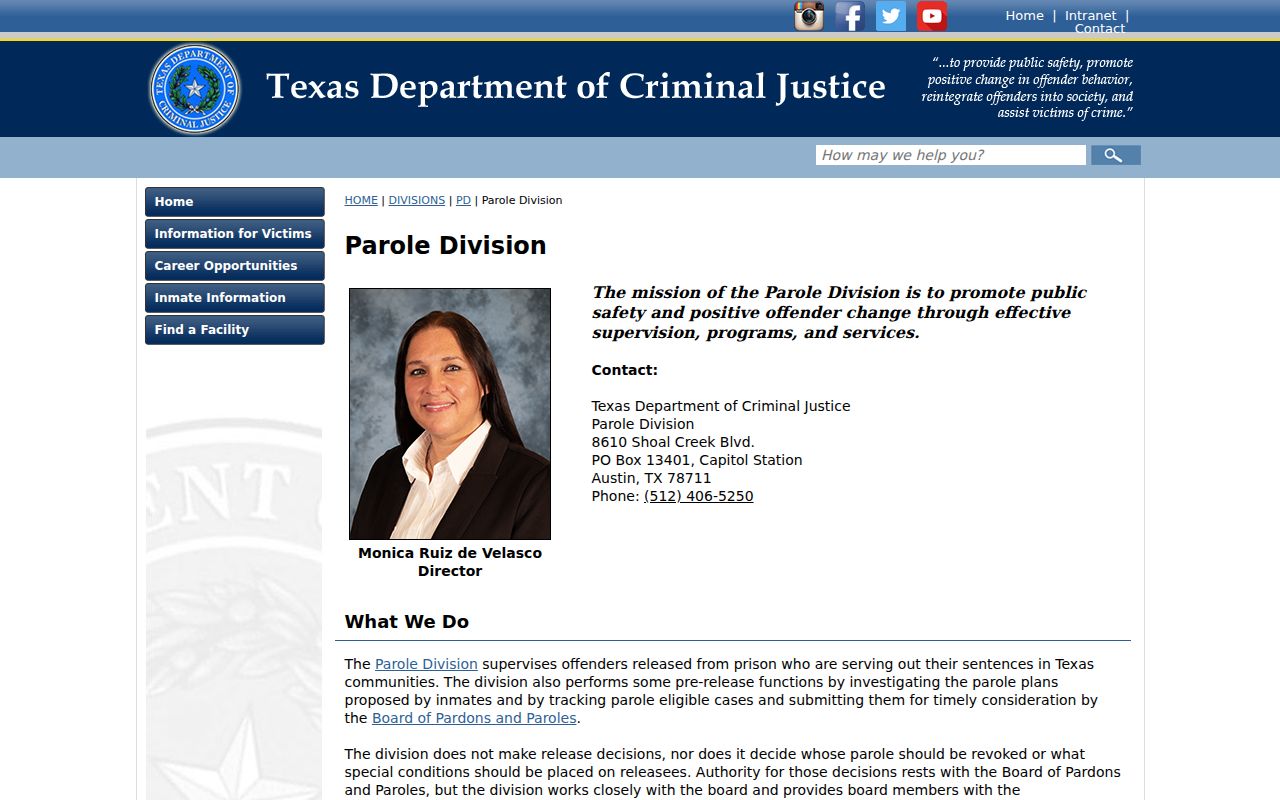
Registry alerts do not replace parole supervision, and the Parole Division is not the public registry search office.
Report Lynn County Registry Noncompliance
Suspected noncompliance should go to the authority that can verify the registration facts. Inside Tahoka, call Tahoka Police at 806-561-4211. Outside a municipality, call the Lynn County Sheriff at 806-561-4505. The Lynn County department directory provides the county's current public office route. The Texas DPS Sex Offender Registration unit can be reached at 512-424-2800 for state program questions. Use 911 only for an emergency.
Share the public profile and the specific fact that appears inconsistent, such as an address or status concern. Do not investigate a residence, confront a listed person, publish private family information, or assume a map discrepancy proves a violation. Local officials can compare the report with records that are not part of the public display.
Community Notification and Lawful Use
Lynn County registry information exists for personal, family, and community safety awareness. Readers may use the public profile to understand a listed offense, view registration status, or plan ordinary precautions. The record does not authorize harassment, threats, vigilantism, unlawful discrimination, or a crime against a registrant or household member.
Misusing registry information can be a crime. Texas Code of Criminal Procedure Chapter 62, including Sections 62.005 through 62.008, governs public registry disclosure and limits protected fields. Registry data does not authorize threats, harassment, vigilantism, or another criminal act.
A careful Lynn County sex offender search ends with verification, not confrontation. Confirm a questionable status through the correct registration authority, account for reporting or geocoding lag, and rely on official updates. For broader county record context, the Lynn County criminal history overview explains why court, custody, and repository files must be checked through their own custodians.